Loading...
Clay soils and summer heat are hard on concrete foundations. We build every slab with the reinforcement, soil prep, and curing that Simi Valley's ground actually demands.
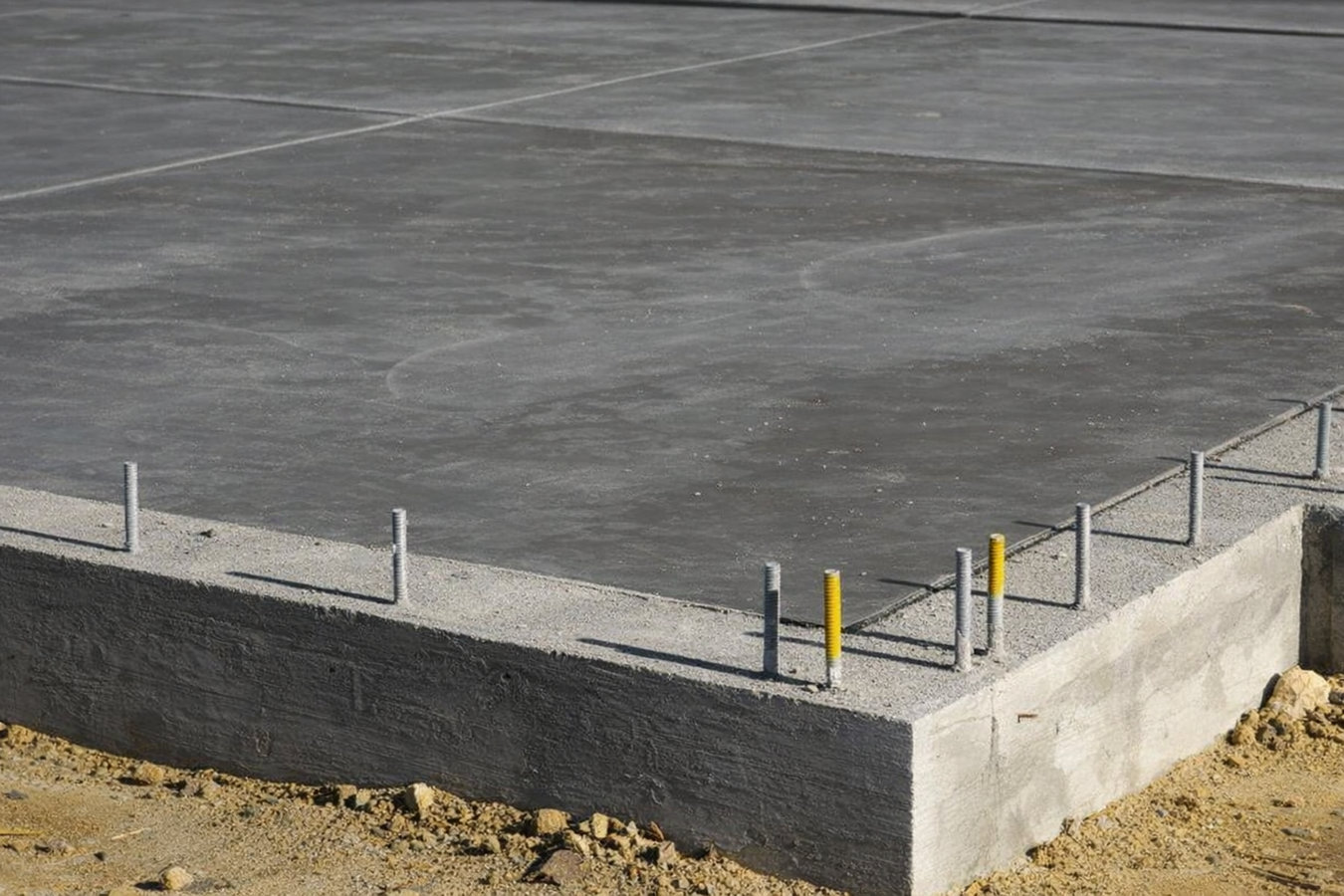
Slab foundation building in Simi Valley means pouring a single reinforced concrete layer directly on prepared ground that becomes both your floor and your home's structural base - most residential jobs take one to two weeks of active work once permits are approved, with the concrete pour itself happening in a single day.
A slab is the most common foundation type in Southern California because the climate and soil conditions - including Simi Valley's clay-heavy foothills - are well-suited to this approach when it is built correctly. That means graded and compacted ground, a gravel base, a moisture barrier, properly placed steel reinforcement, and a concrete mix designed for the local climate. Many homeowners come to us because they are adding an accessory dwelling unit, a garage, or a room addition and need a properly permitted starting point. If you are replacing a damaged or aging slab, we can also coordinate with concrete footings work so the entire structural base goes in together.
If you are adding a room, garage, ADU, or any new structure to your property, you almost certainly need a new slab before any framing begins. In Simi Valley, ADU construction has grown significantly in recent years, and a properly permitted slab is the required starting point for most detached designs. If a contractor quotes you on framing without mentioning the foundation first, ask why.
Small hairline cracks in concrete are normal and usually harmless. But if you can fit a pencil tip into a crack, or if you see cracks running diagonally from the corners of doorways or windows, the slab may have shifted - possibly due to the clay soil movement common in Simi Valley. This kind of cracking can affect structural integrity and is worth having a professional evaluate before it worsens.
When a slab shifts or settles unevenly, the walls above it shift too - and the first sign is usually doors and windows that suddenly stick, won't latch, or have visible gaps at the frame corners. In Simi Valley, this can happen after a dry summer followed by winter rains, when clay soils expand and contract significantly. If you are noticing this in multiple rooms, it is worth having the foundation checked before adjusting hardware.
White, chalky residue on your garage or interior slab - called efflorescence - means water is moving through the concrete and depositing minerals on the surface. A musty smell in a tiled or vinyl-floored room tells the same story. This is more common in older Simi Valley homes built before moisture barrier standards were tightened and often means the vapor barrier has failed or was never installed correctly.
The most common job we handle is a new residential slab for an ADU, garage addition, or ground-up structure on a bare or cleared lot. Every slab we build starts with a site assessment - soil conditions vary across Simi Valley, and a contractor who quotes a slab without seeing the ground is guessing at the prep work. Once we have assessed the site, we handle all of it: excavation, grading, compaction, gravel base, moisture barrier, rebar placement, forming, the pour, finishing, and curing. The city permit and inspections are part of every job - we apply for the permit, coordinate the inspection before the pour, and close out the permit when the work is done. If you need underground plumbing or conduit installed before the slab goes down, we coordinate with your other trades so nothing gets missed.
We also handle slab replacement for older Simi Valley homes where the original foundation has shifted, cracked, or developed moisture issues. This is more involved than a new pour - it means demolition and removal of the old concrete first - but the process that follows is the same. For projects that also require foundation installation work alongside the slab, we can scope both together so the structural components are designed and built as a unified system rather than pieced together separately.
Suits homeowners adding a detached accessory dwelling unit that needs a permitted, inspected concrete base before framing begins.
Suits homeowners adding a new attached or detached garage, workshop, or room addition that requires a ground-level concrete foundation.
Suits homeowners whose original slab has cracked, shifted, or developed moisture issues and needs to be removed and fully rebuilt.
Suits contractors or homeowners building a new structure from scratch who need a correctly permitted and inspected slab as the starting point.
The clay soils found throughout much of Simi Valley - particularly in neighborhoods near the Santa Susana foothills - expand when wet and shrink when dry. Over a full seasonal cycle, that movement can be several inches, which puts steady stress on any slab that was not designed with it in mind. Proper compaction, a deep gravel base, and the right concrete mix are the first line of defense. The second is the moisture barrier, which prevents ground moisture from wicking upward through the slab and into the structure above. Simi Valley's warm, dry summers are also a factor - concrete poured in high heat dries too fast on the surface and develops microcracks before it has fully cured underneath. We schedule pours for early morning in hot months and keep every slab moist through the full curing period. Homeowners in Moorpark and Camarillo face similar clay soil conditions, and we bring the same local approach to every slab we build across this region.
Simi Valley also sits near the Santa Susana fault system, which means California's seismic requirements apply fully here. Every slab we build includes the steel reinforcement and anchor hardware that the city inspector will verify before we pour. A slab that passes inspection is not just legal - it is genuinely safer when the ground moves. For projects on hillside lots in neighborhoods like Wood Ranch, there is often additional grading work needed before the slab can be formed, and we assess that during the initial site visit so it is priced into your estimate rather than arriving as a surprise.
Call or fill out the contact form and we will get back to you within one business day. We will ask about the size of the area, what the slab is for, and whether there are site conditions like a slope or existing concrete to remove - so we can schedule a site visit with the right information.
We visit your property, assess the soil and access conditions, measure the area, and identify any grading or drainage work needed. You receive a written, itemized estimate that breaks out labor, materials, and permit fees separately - no surprise costs added after you sign.
We submit the permit application to the City of Simi Valley and notify you when it is approved. Once cleared, the crew excavates, grades, compacts, installs the gravel base, moisture barrier, and rebar, and schedules the city's pre-pour inspection - the last checkpoint before concrete goes in.
The pour happens in a single day, scheduled for early morning in warm months. The slab then needs at least seven days before light foot traffic and about 28 days to reach full strength - we keep it moist through the curing period. Final city inspection closes the permit, and you receive a complete copy of all permit and inspection records.
Permit timelines in Simi Valley can add weeks to your start date. The sooner you reach out, the sooner we can get the process moving. No obligation, no pressure.
(805) 285-4986We apply for the city permit before any ground is broken and coordinate both the pre-pour and final inspections with the City of Simi Valley's Building and Safety Division. You get a full set of signed permit records when we are done - documentation that protects your home's value and gives buyers confidence if you ever sell.
We assess soil conditions at every site before pricing the job, because skipping or rushing the compaction and base work is the most common cause of slab problems in Simi Valley. Our estimates include the full prep scope - no corners cut to lower a number on paper and no surprise line items when we start digging.
Simi Valley summers regularly push past 95 degrees, and concrete poured in that heat needs specific handling to cure correctly. We schedule every summer pour for early morning, use mixes appropriate for high-temperature conditions, and wet-cure every slab for the full period it needs. This is standard practice for us, not an upsell.
Simi Valley sits near the Santa Susana fault system. The state's seismic requirements are not optional here, and a city inspector will verify them before the pour. We build the steel reinforcement and anchor hardware into every slab from the start - verified by the same inspector who issues your permit sign-off. Learn more about California's seismic standards at the{' '}California Seismic Safety Commission.
Every slab we build in Simi Valley goes through the same process: on-site assessment, proper soil preparation, full permit and inspection documentation, and curing managed for local climate conditions. That consistency is what keeps local homeowners calling us when the next project comes up.
California requires all concrete contractor licenses to be verified through the California Contractors State License Board. For seismic standards that apply to Simi Valley foundation work, the California Seismic Safety Commission publishes guidance on residential construction requirements in high-hazard zones. Foundation reinforcement standards are governed by the American Concrete Institute.
Full foundation installation for new residential construction, including raised foundations and crawl space systems designed for Simi Valley's soil and seismic conditions.
Learn morePoured concrete footings that carry structural loads from walls and columns safely down to stable ground - a common first step before slab or foundation work begins.
Learn morePermit review takes time - reach out now so we can start the process before your project window closes.