Loading...
RedOak Simi Valley Concrete provides stamped concrete services, driveway replacement, and patio construction for Glendale homeowners whose 1920s-to-1940s craftsman and Spanish Revival homes need work that matches the quality of the original build - and we reply to Glendale service calls within 1 business day.
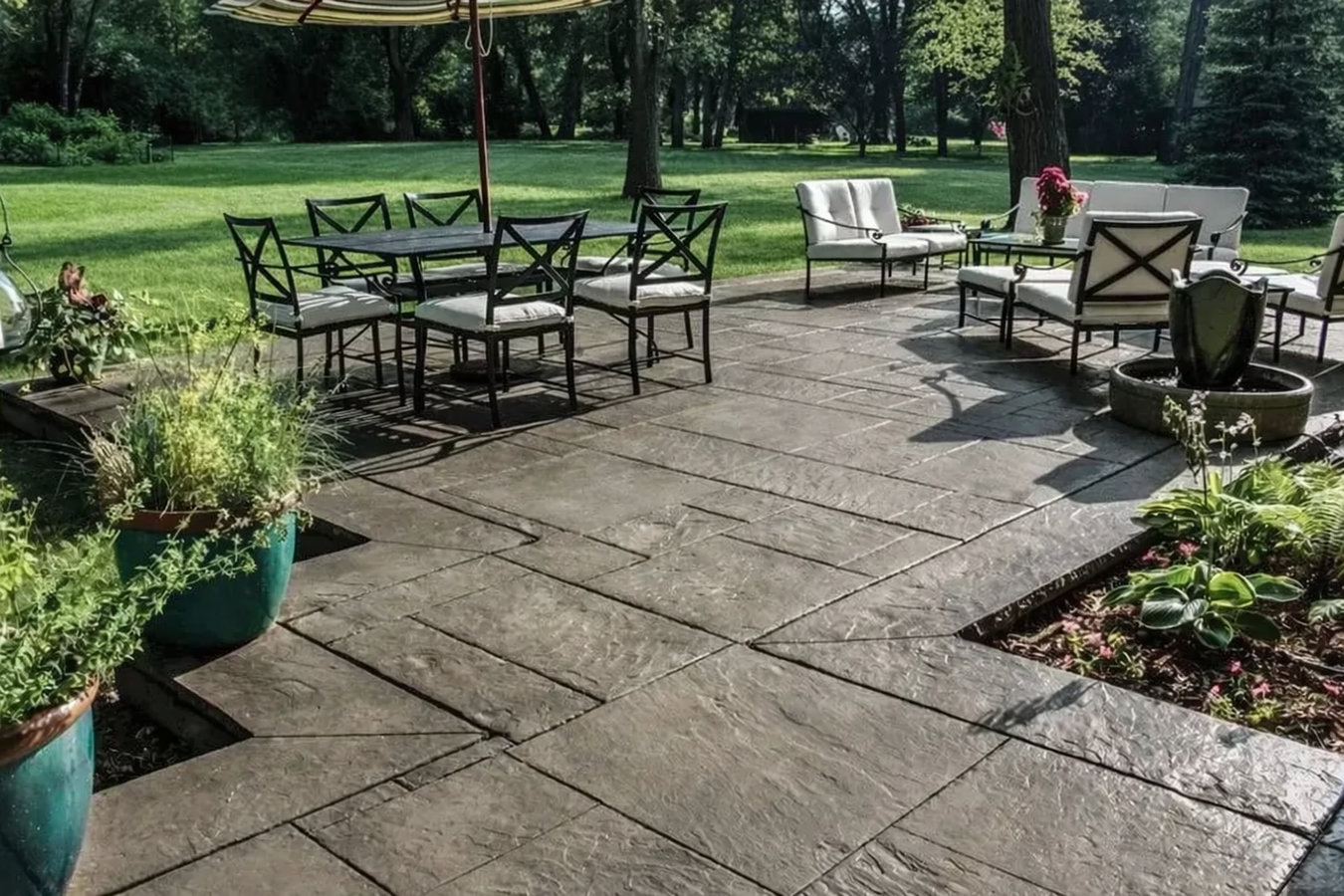
Glendale has a large inventory of pre-1950 Craftsman and Spanish Colonial Revival homes - particularly in neighborhoods like Adams Hill and Montecito Park - and many homeowners want backyard patios, front walkways, or side-yard pathways that match the style of the home rather than using generic gray slabs. Proper stamped concrete services in Glendale means choosing patterns and colors that suit the era of the home - brick or slate patterns for craftsman bungalows, tile or stone patterns for Spanish-style homes - and applying the stamp with consistent pressure and finishing so the pattern holds over the decades. The result is flatwork that looks custom but performs like a standard slab.
Many of the driveways in Glendale's older neighborhoods were poured in the 1940s and 1950s, and by now they are cracked, uneven, and stained from decades of valley heat and heavy use. Glendale's lot sizes are typically modest in the flatland areas - between 5,000 and 7,000 square feet - so the driveway is a visible and important part of the property's presentation. Replacing a 70-year-old driveway with a thicker, properly reinforced slab brings the approach up to current standards and improves the home's curb appeal.
Glendale backyards on flatland lots are typically small - 1,500 to 3,000 square feet - which means the patio takes up a significant share of the outdoor space and needs to perform. Concrete patios handle Glendale's hot, dry summers better than pavers, which shift in the clay-heavy soil, and better than composite decking, which warps and fades under sustained UV exposure. Many homeowners choose a stamped or broom-finish surface to keep the patio cooler underfoot and to match the style of the home.
Hillside properties in Glendale - especially homes in the Verdugo Woodlands and Chevy Chase Canyon - have steep lots with retaining walls built decades ago that are now cracking or leaning from soil pressure and inadequate drainage. Glendale's winter rains hit these hillside properties hard, and water that is not properly drained behind a retaining wall will push it out of alignment over time. Replacing a failing retaining wall with a reinforced, properly drained structure protects the slope and the house it supports.
In Glendale, property owners are responsible for maintaining the public sidewalk adjacent to their home, and many of the older sidewalks in neighborhoods like Adams Hill and Montecito Park were poured in the 1940s and 1950s. Large street trees, soil movement, and decades of age have lifted and cracked many of these panels, and the City of Glendale requires homeowners to keep the sidewalk safe and even. We replace damaged sections to city standards and pull permits when required.
Attached garages on Glendale's older homes - particularly those built before 1960 - were poured as thin utility slabs without vapor barriers, and decades of moisture wicking up from below has left many of them with surface scaling, cracking, and staining. As homeowners convert these garages into workshops, home gyms, or accessory dwelling units, those original slabs need to be replaced with thicker, reinforced pours that can support the new use and take a coating or tile finish.
Glendale is a dense, owner-occupied city of about 196,000 residents packed into roughly 30 square miles, which makes it one of the more densely populated cities in Los Angeles County. The median home value is well above $800,000, and many homes have sold for over $1 million in recent years, which means homeowners here have significant equity in their properties and tend to invest in quality work that will last. A large portion of Glendale's housing stock was built before 1960, with many homes dating to the 1920s through 1940s. That includes Craftsman bungalows in neighborhoods like Adams Hill and Montecito Park, Spanish Colonial Revival homes with stucco exteriors and clay tile roofs, and hillside properties in the Verdugo Woodlands and Chevy Chase Canyon built on steep lots with retaining walls and custom foundations. Homes this old often have original concrete flatwork - driveways, patios, walkways, and garage slabs - that was poured thinner and with less reinforcement than modern standards require.
The climate and geography create steady demand for concrete work. Glendale summers are hot and dry, with temperatures regularly reaching the mid-90s and occasionally topping 100 degrees Fahrenheit. The city sits inland enough that the ocean breeze that cools coastal LA neighborhoods barely reaches it, and that sustained heat stresses concrete, cracks caulk, and dries out roofing materials and exterior coatings faster than homeowners expect. Fall brings Santa Ana wind events that can gust over 50 mph in the hillside areas and have historically contributed to wildfires in the Verdugo Mountains directly above the city. Hillside properties in the northern and eastern parts of Glendale have steep grades, retaining walls, and drainage systems that need more attention than flat-lot homes in the valley below. Winter rains expose drainage failures, crack aging concrete, and cause erosion on hillside lots.
Concrete work in Glendale is processed through the Glendale Building and Safety Division, which handles plan check and inspection for driveways, retaining walls, and any structural flatwork connected to a building. Many residential driveway and patio pours do not require a building permit if they meet setback and drainage requirements, but work that alters grade, involves retaining walls over 4 feet, or is tied to additions does require permitting. We handle all permit filings when required and coordinate city inspections so your project stays on schedule.
The flatland neighborhoods of Glendale - the blocks around Brand Boulevard, Montecito Park, and the areas near the Americana at Brand - have older homes on modest lots with tighter access for concrete trucks and equipment. The hillside areas climbing toward the Verdugo Mountains have steeper driveways, retaining walls, and properties where water runoff is a constant concern. We work across both terrains. The neighborhoods around Forest Lawn and up near the Verdugo foothills are particularly prone to soil movement and drainage challenges that flat-lot properties do not experience.
We also serve homeowners in Burbank and other nearby areas in Los Angeles County. The housing stock and lot types vary across these cities, but the work is similar - replacing aging flatwork on older homes and handling the drainage and slope challenges that come with hillside properties.
When you reach out by phone or through the contact form, we get back to you within 1 business day to schedule a site visit. We ask about your property location, the scope of the work, and what you are trying to fix or improve so we come prepared with the right context.
We visit your property to see the existing concrete, measure the area, check the grade and drainage, and identify any site-specific conditions that affect the work. You get a written itemized estimate with clear line items for demolition, excavation, materials, and labor so you know the full cost before any work begins.
Once you approve the estimate, we schedule the job, handle any required permits with the Glendale Building Division, and coordinate inspections if the work requires them. We complete demolition, excavation, sub-base prep, and the pour in 1 to 3 days depending on the project size and whether the lot is flat or hillside terrain.
The new concrete needs at least 5 to 7 days to cure before foot traffic and 14 days before vehicle traffic. We mark the cure period clearly and do a final walkthrough to confirm the work meets your expectations and the city inspector's requirements if a permit was pulled.
We respond to Glendale service calls within 1 business day and provide written itemized estimates before any work starts.
(805) 285-4986Glendale is a large, dense city in Los Angeles County with about 196,000 residents living in roughly 30 square miles. The city sits in a valley surrounded by the Verdugo Mountains to the east and the San Gabriel Mountains to the north, with the Los Angeles River forming part of its western boundary. Glendale is known for the Americana at Brand, a major shopping and entertainment complex in the heart of the city, and for Brand Boulevard, the main commercial street that runs through downtown. The city is also home to major employers including DreamWorks Animation, Nestlé USA, and Public Storage, and it has a large Armenian-American community that makes up roughly 40% of the population. Glendale is a city where people put down roots - homeownership rates are high, and many properties are owner-occupied rather than rented.
The city has well-known neighborhoods with distinct characters. Adams Hill and Montecito Park are known for older Craftsman and Spanish-style homes on tree-lined streets, while the Verdugo Woodlands and Chevy Chase Canyon have larger custom homes on hillside lots with steeper driveways and retaining walls. The hillside neighborhoods are more exposed to wildfire risk, intense Santa Ana winds in fall, and drainage challenges from winter rains. The flatland areas closer to downtown and the Americana have older homes on modest lots with tighter access. Many of Glendale's homes were built in the 1920s through 1940s, which means the housing stock is old enough that roofs, foundations, plumbing, and concrete flatwork are often due for replacement rather than repair. Nearby cities we also serve include Pasadena and other Los Angeles County communities with similar housing age and hillside terrain challenges.
Serving these cities and communities.
We respond within 1 business day and provide written itemized estimates before any work starts. Call now or submit the form to get on the schedule.