Loading...
Old cracked driveways do more than look bad - they direct water toward your foundation and create trip hazards. We build concrete driveways that handle Simi Valley's clay soil, hot summers, and local permit requirements from day one.
A concrete driveway in Simi Valley starts with removing your old surface, grading the ground so water drains away from your home, laying a compacted gravel base designed for local clay soils, then pouring and finishing the concrete - most jobs take two to four days of active work plus seven days of curing before you can drive on it.
If your driveway is cracking, sinking, or sending water toward your garage, the problem usually starts underground. Simi Valley's clay-heavy soil expands and contracts with the seasons, and driveways that were not built with that in mind fail faster than they should. A proper base - not just the concrete itself - is what keeps your driveway solid for decades. Many homeowners also pair driveway work with concrete patio construction or concrete sidewalk building to complete the exterior hardscaping in a single project.
Small hairline cracks along control joints are normal. But cracks wider than a quarter-inch, cracks running the full width, or cracks that grow each season mean the slab is failing. Simi Valley's clay soil - which expands wet and shrinks dry - is the most common cause of this progressive damage.
If part of your driveway sits noticeably lower than the rest or has tilted so water pools on it, the base beneath has moved. Uneven surfaces are trip hazards, and the water they collect can work its way toward your foundation. Soil movement after wet winters is a frequent cause in this area.
When the top layer of concrete flakes off in chunks or the surface looks pitted and rough, the material itself is breaking down. This is called spalling, and Simi Valley's prolonged sun and heat cycles accelerate it on older driveways. Once spalling starts, it spreads.
A driveway that slopes the wrong way - or that has developed low spots over time - sends rainwater straight toward your garage or foundation. In Simi Valley, where winter storms can deliver heavy rain in short bursts, poor drainage can lead to water intrusion that causes far more expensive damage than a new driveway would.
Every concrete driveway we build starts the same way: with an in-person assessment of the existing surface, the soil underneath, and how your property drains. We handle the City of Simi Valley building permit from application through inspection, so you never have to chase paperwork. Demo of your old surface, base preparation, the pour, finishing, and final cleanup are all included in a single written estimate with no surprises at the end.
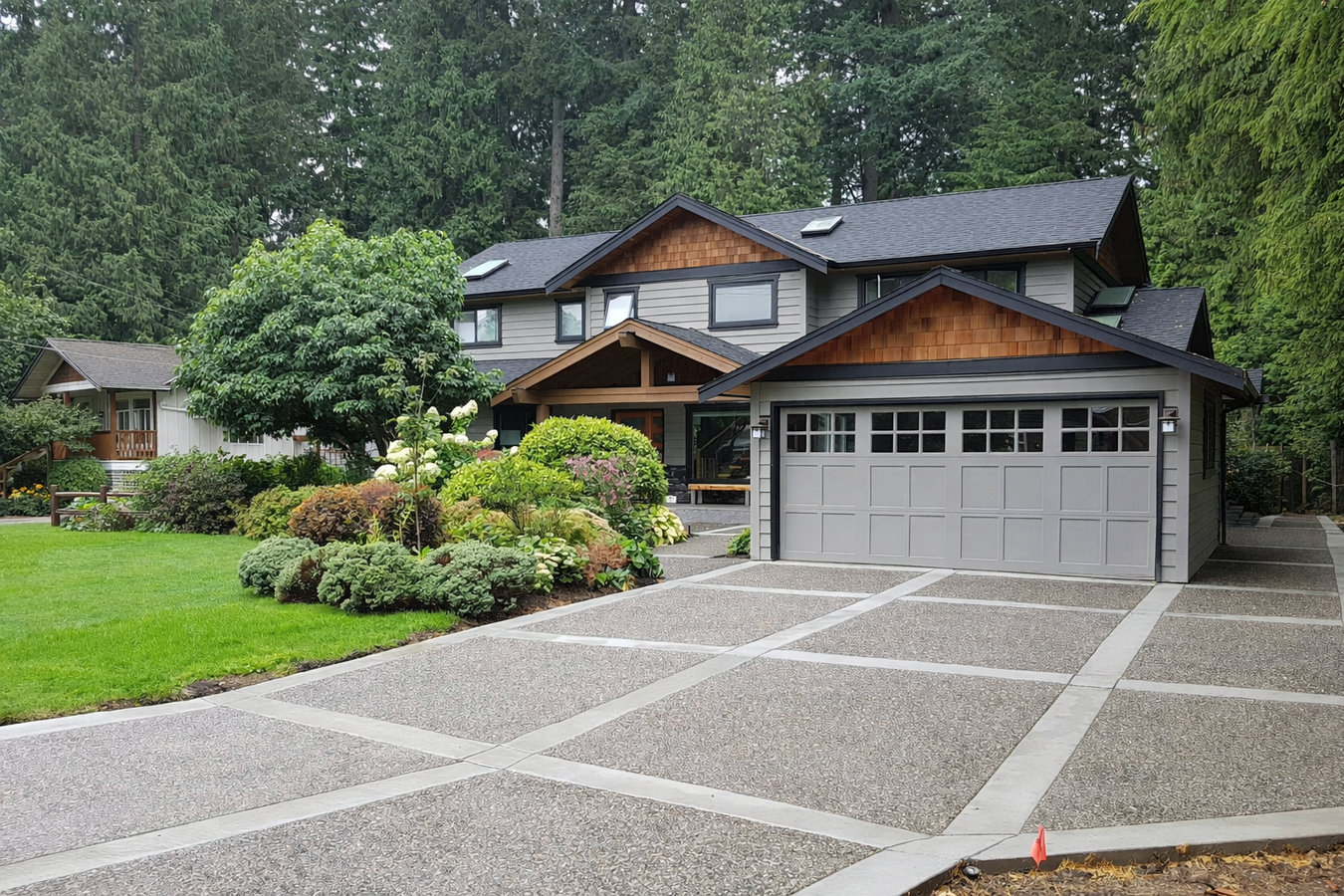
Finish options range from a standard broom finish - the most practical choice for Simi Valley's heat - to exposed aggregate and stamped patterns that complement your home's exterior. Thickness is matched to your actual use: standard four-inch depth for passenger vehicles, up to six inches if you park trucks, trailers, or RVs. Many homeowners bundle driveway replacement with concrete patio construction to reduce mobilization costs, or add new sidewalks at the same time for a consistent look across the whole front of the property.
Best for most residential driveways. Textured surface reduces slipping and stays cooler than smooth concrete.
Decorative look with natural stone visible in the surface. Durable and well-suited to Simi Valley's sunny climate.
Mimics stone, brick, or tile at a lower cost. Good choice for homeowners who want curb appeal beyond plain gray.
5 to 6 inches for properties with heavy vehicles, trailers, or RVs. Prevents cracking under loads standard driveways cannot handle.
Includes modification of the driveway approach where it meets the street. Requires additional city coordination.
Old surface removed, base rebuilt from scratch. The right option when the existing driveway has structural issues.
Simi Valley's clay-heavy soil is the single biggest factor that separates a driveway that lasts 30 years from one that cracks in two. Clay soil swells when it absorbs moisture during our winter rains and shrinks as the dry season sets in. That constant movement puts stress on any concrete slab sitting on top of it. A concrete driveway contractor who does not account for this in the base preparation is setting you up for an expensive repair call within a few years. We see this pattern repeatedly across Simi Valley neighborhoods, particularly in homes built during the growth period of the 1970s through 1990s.
Heat is the other major factor. Summer temperatures regularly exceed 95 degrees here, and concrete poured in afternoon heat can dry too fast on the surface before the rest of the slab has fully hardened - a setup for surface cracking that shows up in year one. We schedule pours for early morning in warm months and use slump-adjusting additives when necessary. We also serve homeowners across the wider region, including Thousand Oaks and Moorpark, where similar soil and climate conditions apply.
We respond within 1 business day. We schedule an in-person visit to measure your driveway, assess the existing surface and soil conditions, and talk through finish options. You get a written estimate that breaks down every cost - no phone quotes without seeing the site.
We apply for the City of Simi Valley building permit before any work starts. This typically takes one to two weeks. We give you the project details you need for HOA approval if your neighborhood requires it - that submission is yours to make, but we flag it early.
The crew removes your existing surface, grades and compacts the base for local soil conditions, sets the forms, and pours the concrete. Summer pours happen early morning. Control joints are cut before the slab fully sets.
Vehicles stay off for a full seven days. The city inspector signs off on the work and we remove the forms and clean up. We walk you through care instructions before we leave - sealing schedule, who to call if something looks off in the first few months.
We respond within 1 business day. There is no obligation - getting an estimate is just a conversation. After you submit, someone from our office will call to schedule a free on-site visit so we can give you an accurate written quote.
(805) 285-4986We hold a California C-8 Concrete Contractor license, which is the specific license required for concrete flatwork in this state. Every job is covered by liability insurance and workers compensation - protecting you if anything goes wrong on your property.
We work in this city every week. We know the specific clay soil conditions in different Simi Valley neighborhoods, which HOA communities have approval requirements, and how the Building and Safety Division handles permit timelines. That local knowledge affects every job we do.
We have never started a permitted project without the permit in hand. The city inspection that comes with a proper permit is the only guarantee that the work was done to minimum code standards - and it protects your home's records for future sale.
We do not quote over the phone without seeing the site. Every estimate we give is in writing, itemized by scope - demolition, base prep, concrete, and finishing shown separately. More than 50 Simi Valley homeowners have used our written estimates to compare bids confidently.
The California Contractors State License Board maintains a public database where you can verify any contractor's license status before hiring. A C-8 license specifically covers concrete work - make sure any concrete contractor you consider holds one.
These are not just credentials on paper. They are the things that determine whether your driveway is still solid in ten years and whether you have someone to call if something is not right. Contact us to get started.
Turn a dirt or grass backyard into a usable outdoor space with a properly poured concrete patio built for Simi Valley's soil and climate.
Learn moreReplace cracked or uneven walkways with code-compliant concrete sidewalks that connect your driveway and entrance cleanly.
Learn moreNew driveways book quickly in spring and fall - reach out now to get on the schedule before the next season fills up.