Loading...
RedOak Simi Valley Concrete handles concrete floor installation, driveway replacement, and patio work for Burbank homeowners whose 1940s-to-1960s homes need upgrades built to last - and we have been serving the San Fernando Valley within 1 business day since 2023.
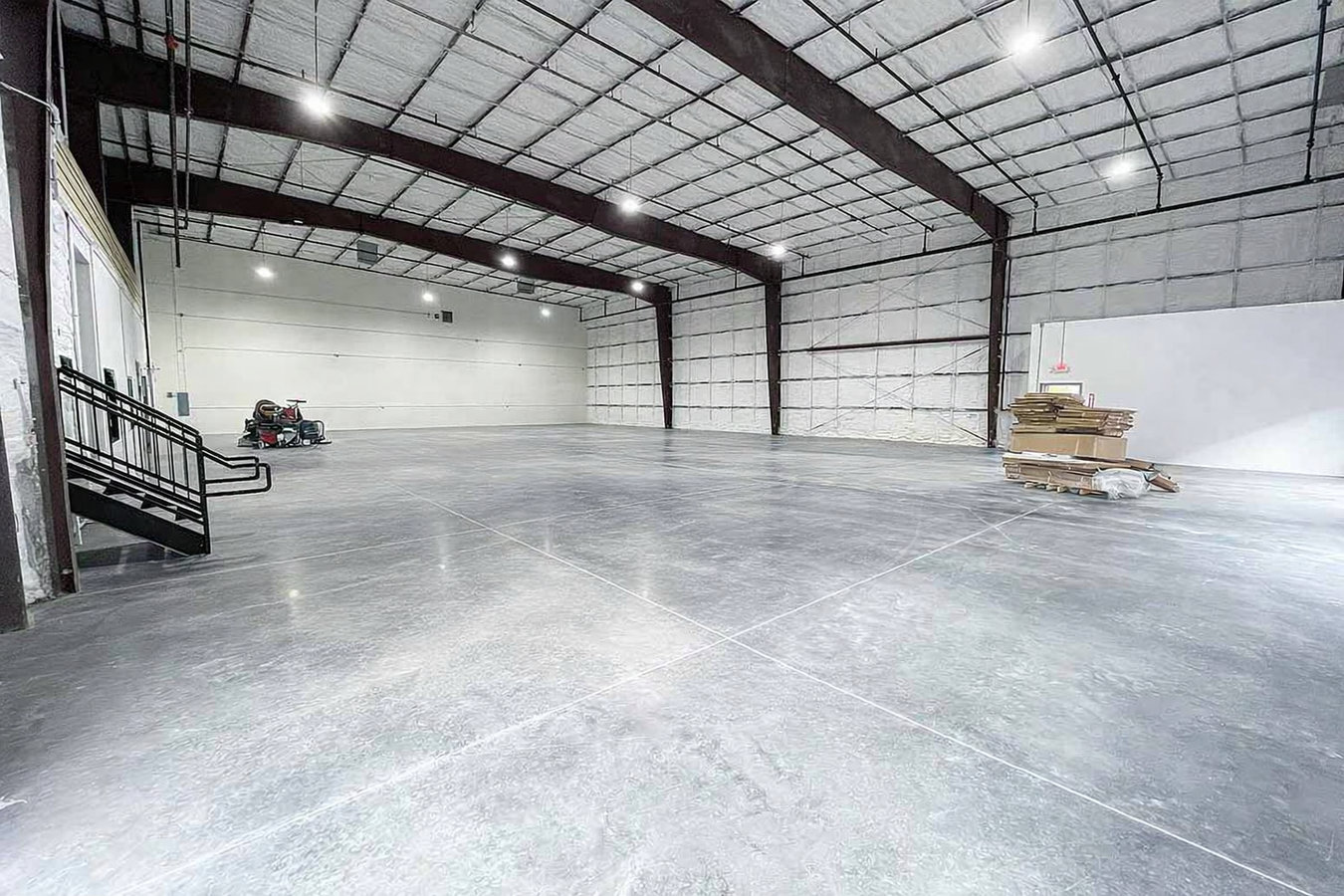
Burbank has one of the highest concentrations of postwar bungalows in the San Fernando Valley, and many of those homes still have their original 1940s and 1950s garage and interior slabs - poured thin, without vapor barriers, and well past their useful life. Proper concrete floor installation in Burbank means removing the old slab, compacting and leveling the sub-base, installing a vapor barrier to stop the moisture migration that older slabs never addressed, and pouring to current thickness and reinforcement standards. The result is a floor that does not crack, rock, or stain the way the original did.
The flatland neighborhoods of Burbank - particularly the bungalow blocks near downtown and in the Rancho area - have driveways that were poured in the 1940s and 1950s on modest 5,000- to 7,000-square-foot lots. Those driveways are now 60 to 80 years old, and decades of valley heat, stucco debris from adjacent walls, and the wet-dry soil cycle have left them cracked, stained, and uneven. Replacement with current standards and proper control joint placement gives these homes a driveway that will outlast the original by decades.
Burbank yards are typically small on the flatland lots - 5,000 to 7,000 square feet total - which means the backyard patio is a significant part of the usable outdoor space. A concrete patio handles Burbank's sustained summer heat better than composite decking, which can warp and fade, and it stays stable where pavers shift over the clay-rich soil. Homeowners updating older patio slabs often add stamped finishes or exposed aggregate to improve the appearance without changing the material.
Hillside properties in Burbank - particularly the homes that climb toward the Verdugo Mountains - have steeper grades and more complex drainage than the flatland neighborhoods below. Many of those hillside lots have retaining walls built in the 1950s and 1960s that are now cracking or leaning from decades of soil movement and inadequate drainage behind them. Replacing a failing wall with a properly drained, reinforced concrete structure protects the slope and the structures it supports.
Attached garages on Burbank's postwar homes were built as utility spaces, and the slabs that were poured for them were minimal by today's standards. As homeowners convert garages into workshops, home gyms, or ADU living spaces, those original slabs need to be replaced with thicker, reinforced pours that can handle the new loads and finish materials. A proper garage slab replacement also gives the space a clean, even surface that a coating or tile finish can actually bond to.
In Burbank, property owners are responsible for maintaining the public sidewalk adjacent to their home. Many of Burbank's flatland sidewalks were originally poured in the 1950s, and the combination of age, large street trees, and the seasonal soil movement that affects the whole San Fernando Valley has lifted and cracked panels across many neighborhoods. The City of Burbank requires damaged sections to be repaired in accordance with city standards, and we handle the replacement to code.
Burbank is a dense, owner-occupied city of about 103,000 residents sitting in the heart of Los Angeles County, and most of its housing stock dates from the postwar decades of the 1940s through the 1960s. That means the majority of homes here are 60 to 80 years old, with concrete flatwork - garage floors, driveways, walkways, and patio slabs - that was poured under the building standards of that era. Those older slabs were typically thinner, less reinforced, and poured without vapor barriers, which were not yet standard practice. The result, decades later, is widespread cracking, moisture wicking up through garage and interior floors, and surface scaling that cannot be fixed with patching or overlays. Burbank homeowners with homes in this age range should expect their original concrete to need replacement rather than repair.
The climate adds consistent pressure. Burbank summers regularly exceed 95 degrees Fahrenheit, with some heat waves pushing into the triple digits, and the city sits inland where the ocean breeze that cools coastal Los Angeles does not reach. That sustained heat dries out caulk, accelerates UV breakdown on exposed surfaces, and concentrates thermal stress on concrete that expands and contracts with every temperature swing. Fall brings Santa Ana wind events that can gust over 50 mph, damaging exterior features and depositing debris. And Burbank's proximity to the Verdugo Mountains means the hillside neighborhoods face additional soil movement and drainage challenges not shared by the flat-lot neighborhoods closer to downtown.
Concrete permits in Burbank are processed through the Burbank Building and Safety Division, which handles plan check and inspection for floor installations, driveway approaches, retaining walls, and any structural flatwork connected to a building. The city requires pre-pour inspections on permitted work, which means the permit timeline needs to be built into the schedule from the start. We handle all permit filings and coordinate city inspections so the job does not stall waiting for paperwork.
The flat-lot neighborhoods around downtown Burbank - the bungalow blocks near Magnolia Park and San Fernando Boulevard - have tight lots with minimal setbacks and small backyards, which means equipment access and staging require planning before we show up. Hillside properties near the Verdugo Mountains have wider lots but steeper grades, and jobs there often involve drainage coordination alongside the concrete work itself. We work throughout Burbank and know which neighborhoods have which constraints before we give you a schedule.
We also serve homeowners in neighboring Glendale, which shares Burbank's postwar housing stock and clay-soil conditions, and Pasadena, where older homes with larger lots have their own set of concrete maintenance needs. If your job spans the boundary between Burbank and either of those cities, we cover all of it without splitting the crew.
Call or use the contact form to describe your project and your location in Burbank. We respond within 1 business day and set up a site visit at a time that works with your schedule - you do not need to take time off for this.
We visit the property, assess the existing slab condition, check lot access and sub-base conditions, and give you a written itemized estimate with a firm total - not a range. We address cost questions directly at this stage so you know exactly what the job involves before committing.
For permitted work, we file with the Burbank Building and Safety Division and notify you when approval is in hand. We demo and remove the old slab, prepare the sub-base, and arrange utility location through Dig Alert (California 811) before any digging begins.
We complete the pour, protect the surface during the cure period - particularly important given Burbank's heat - and schedule the final city inspection before closing out the permit. You receive all permit documentation at project completion for your home records.
We assess the property, review the existing slab conditions, and give you a written estimate with no obligation. Burbank homeowners typically hear back from us within 1 business day - and most old slabs are worse than they look, so the sooner we assess it, the better.
(805) 285-4986Burbank is a city of about 103,000 people located in the eastern San Fernando Valley, known nationally as the home of major entertainment studios including Warner Bros. and Disney. For the people who live here, Burbank is a dense, walkable city with a strong owner-occupied housing culture and neighborhoods that have retained much of their postwar character. The flatland neighborhoods - the bungalow blocks near downtown Burbank along San Fernando Boulevard and the Magnolia Park district - are made up mostly of single-story ranch homes and small bungalows built in the 1940s and 1950s on modest lots. The Hillside neighborhoods that climb toward the Verdugo Mountains to the north have larger lots, steeper grades, and more custom-built homes from the 1950s through the 1980s, many with retaining walls and drainage systems that were not designed to last this long.
The housing stock across most of Burbank is 60 to 80 years old, which puts it in the range where original concrete - floors, driveways, walkways, and garage slabs - is reaching or past end of life. Burbank sits immediately adjacent to Glendale to the east, where the housing age and conditions are similar, and both cities draw homeowners who are investing in renovations on homes they plan to stay in for decades. Hollywood Burbank Airport sits at the northern edge of the city, and the neighborhoods below the flight path - particularly in the north Burbank flats - have some of the densest concentrations of original postwar homes in the region.
Serving these cities and communities.
Whether it's a cracked garage floor, a driveway from the Eisenhower era, or a patio that has seen better days - call or message us today. We serve all of Burbank and respond within 1 business day.