
Loading...
RedOak Simi Valley Concrete serves Granada Hills with driveways, decorative finishes, and patios for the neighborhood's ranch-style homes and older housing stock - and we have been responding to Granada Hills homeowners within 1 business day since 2023.
Granada Hills homeowners investing in outdoor upgrades often want surfaces that look better than standard gray concrete, and decorative concrete gives them that without the ongoing maintenance that pavers or natural stone require. Stamped patterns, color overlays, and exposed aggregate finishes all work well in the San Fernando Valley climate - they hold up to the heat and clay-soil movement better than thin veneers or loose-set materials that shift with the wet-dry cycle.
Most Granada Hills homes were built between the 1950s and 1970s, and the original driveways from that era are now 50 to 70 years old. Decades of valley heat, clay-soil movement, and mature tree roots have produced the cracked, heaved, and uneven driveways that are common throughout the neighborhood. Full replacement with current thickness standards and proper control joint placement gives these homes a driveway that lasts decades longer than another patching job ever will.
Granada Hills' larger backyards give homeowners real outdoor space to use, and a concrete patio handles the valley's extreme summer heat and clay-soil movement better than composite decking or pavers that shift each year. Homes with older patios that were poured thin and without rebar are seeing surface scaling and cracking after 30-plus years, and replacement gives them a permanent outdoor surface that matches the scale of the yard.
Granada Hills was near the epicenter of the 1994 Northridge earthquake, and many homes experienced foundation cracking and structural shifting that day. Some repairs were done quickly under emergency conditions and were never built to last, and the effects show up now as recurring foundation cracks, uneven floors, and doors that no longer close square. We assess what the foundation actually needs - whether that is crack repair, slab lifting, or full footing reinforcement - and build it back to code.
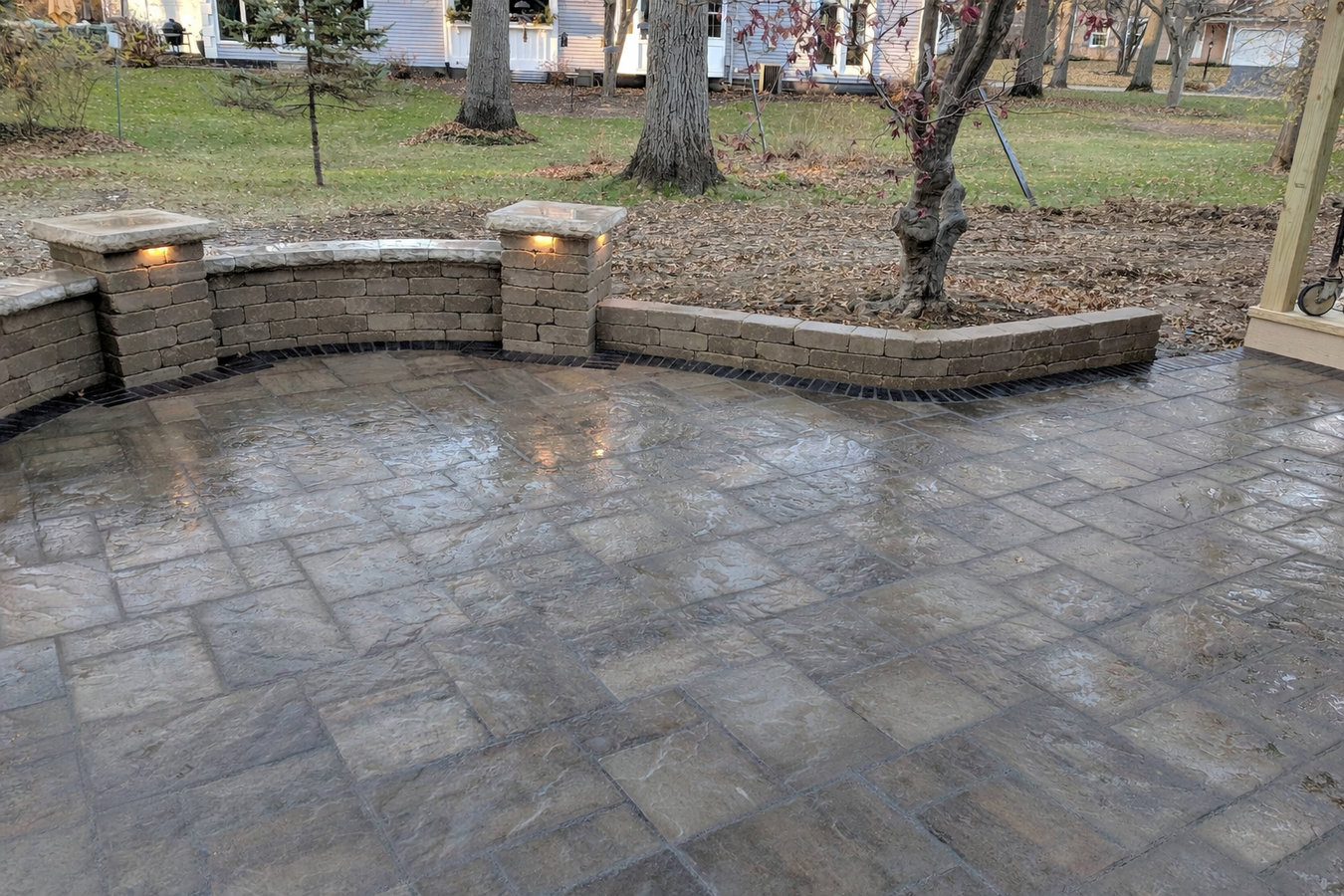
Stamped concrete gives Granada Hills homeowners the look of natural stone, brick, or slate without the installation cost or ongoing maintenance those materials require. It works especially well for patios, pool decks, and front walkways where a decorative finish adds curb appeal and holds up to the valley sun without fading or lifting the way thin overlays sometimes do.
Large mature trees are everywhere in Granada Hills, and their roots have a long history of lifting and cracking sidewalk panels over decades. The City of Los Angeles requires property owners to maintain the sidewalk adjacent to their home, and damaged panels create both a trip hazard and a liability. We replace lifted sections with proper root barrier installation where large trees remain near the new slab, so the replacement lasts longer than the original did.
Granada Hills is a residential neighborhood in the northwestern San Fernando Valley with a population of roughly 55,000 to 60,000 residents living primarily in single-family homes. The bulk of that housing stock was built during the postwar suburban expansion of the 1950s through 1970s, when the valley was being developed as a bedroom community for families moving out of central Los Angeles. That means most homes in Granada Hills are now 50 to 70 years old, and the concrete flatwork that was poured when those homes were built - driveways, walkways, garage slabs, and patio slabs - is still in place and showing its age. The clay-rich soils that define the San Fernando Valley expand during the winter rainy season and shrink during the long dry summer and fall, and that repeated movement puts stress on every concrete surface sitting on top of it. Over decades, that stress produces the cracked driveways, heaved walkways, and settling garage floors that Granada Hills homeowners recognize across the neighborhood.
The 1994 Northridge earthquake adds another layer to the story. The epicenter was less than ten miles from Granada Hills, and the neighborhood experienced widespread foundation cracking, chimney collapse, and structural shifting. Many of those repairs were done quickly in the months after the quake, and some were not done to the standards that a long-term fix would require. Three decades later, homes that were patched but never fully repaired continue to show recurring foundation cracks, uneven door frames, and slabs that have settled unevenly where the soil underneath compacted after the quake. Any contractor working in Granada Hills needs to understand that much of the concrete work they see today is not just aging naturally - it is also dealing with the aftereffects of a seismic event that hit hard and left a mark that still shows up when you dig into the ground.
Residential concrete permits in Granada Hills go through the Los Angeles Department of Building and Safety, which processes permit applications for driveway approaches, retaining walls, and structural flatwork across the city. Permit timelines vary depending on workload and project complexity, but most standard residential concrete jobs fall into the one-to-three-week range for plan check and approval. We factor permit processing time into the project schedule from the start and handle the filings so homeowners are not left managing city paperwork while also managing a job site.
Granada Hills sits between Chatsworth to the west and Northridge to the south, with Porter Ranch to the north - all communities built during the same postwar expansion and sharing similar housing age and homeowner demographics. The streets near Granada Hills Charter High School and the neighborhoods around Knollwood Country Club are some of the most established residential areas in the Valley, with mature trees, well-maintained homes, and a strong sense of community identity. These are neighborhoods where homeowners know each other and talk, so a contractor with a poor local reputation is not going to last long.
We serve Chatsworth directly to the west, where the same mid-century housing stock and clay-soil conditions drive similar patterns of driveway and flatwork wear. We also work in Santa Clarita to the north, where newer housing and hillside terrain create different challenges but the same demand for concrete contractors who understand the local ground conditions and climate.
Call us at (805) 285-4986 or fill out the contact form and we will respond within 1 business day to schedule a site visit. We schedule across Granada Hills throughout the week, including Saturdays.
We walk the property, identify what is actually failing and why, and provide a written estimate with no obligation. Granada Hills homes often have multiple problem areas - mature tree roots lifting walkways, cracked driveways, or old earthquake damage - and we look at all of it so you understand what needs work.
If your project requires a Los Angeles permit - driveway approaches, retaining walls, or structural work - we file the paperwork and coordinate inspections before the crew begins. Most permits in this category process within one to three weeks, and we factor that timeline into the schedule from the start.
Most Granada Hills residential concrete projects complete in one to three days on site. After the pour, we give specific cure time guidance - typically five to seven days before light foot traffic and ten to fourteen before vehicle loads - so the slab reaches full strength before use.
We serve Granada Hills homeowners throughout the week. Tell us about your project and we will respond within 1 business day.
(805) 285-4986Granada Hills is a residential neighborhood in the northwestern San Fernando Valley, with a population of roughly 55,000 to 60,000 residents living primarily in single-family homes on larger lots than most of Los Angeles. The neighborhood was developed mostly between the 1950s and 1970s as part of the postwar suburban expansion of the Valley, and the dominant housing style is the ranch home - single-story with an attached garage, stucco exterior, and a backyard. Home values in Granada Hills are well above the Los Angeles city average, and the owner-occupancy rate is notably high compared to much of the city. This is not a high-turnover rental neighborhood - most people here own their homes, have lived in them for years, and plan to stay. The neighborhood is home to Granada Hills Charter High School, one of the largest charter high schools in the country, and Knollwood Country Club, a private golf course that has been a local landmark since the 1950s.
Granada Hills borders Northridge to the south, Porter Ranch to the north, and Chatsworth to the west - all sharing similar housing age, lot sizes, and homeowner demographics. The 1994 Northridge earthquake struck just a few miles from Granada Hills and is the defining event in the neighborhood's recent history - nearly every long-term resident remembers exactly where they were when it hit, and many homes still carry damage from that day that was never fully repaired. The combination of aging mid-century homes, clay soils that shift through the wet-dry cycle, and earthquake legacy makes Granada Hills a neighborhood where concrete work is not optional maintenance - it is part of owning a home here, and homeowners who invest in quality work the first time save themselves years of repeat repairs down the road.
Serving these cities and communities.
Summer heat and winter rains both drive demand - call us at (805) 285-4986 or request a free estimate today.