Loading...
Your foundation carries your entire home. We install every one for Simi Valley's clay soils, seismic zone, and permit requirements - so you get a base that holds up for decades.
Foundation installation in Simi Valley covers everything your home needs to sit safely on the ground - from excavation and soil preparation through the concrete pour, curing, and city inspection sign-off. Most residential jobs take one to three weeks of active construction once the permit is in hand, with the total timeline running four to eight weeks when permit review is included.
Most single-family homes in Simi Valley sit on a slab-on-grade foundation, which is poured directly on compacted ground and serves as both the floor and the structural base of the home. This approach works well in Southern California when the soil is properly prepared and the concrete is reinforced for local conditions - the clay-heavy soils that run through much of Simi Valley require specific compaction and drainage steps that a contractor without local experience may skip. Many of our foundation installation projects are new builds and ADU additions, though we also handle foundation work alongside slab foundation building when a homeowner needs both scoped together.
If doors or windows that used to open and close easily now stick, drag, or leave visible gaps at the corners, the frame of your home may be shifting. This is one of the earliest signs that the foundation is moving - and in Simi Valley, where the soil expands and contracts with seasonal moisture changes, this kind of movement is more common than most homeowners realize. Multiple rooms showing the same pattern at the same time is worth having investigated.
Hairline cracks in drywall happen in any home, but diagonal cracks that radiate from the corners of door or window openings are a specific warning sign. They indicate that different parts of your foundation are settling at different rates - a pattern that tends to worsen over time if the underlying cause is not addressed. Simi Valley's clay soils can drive this kind of differential movement after a dry summer followed by winter rains.
Walk around the perimeter of your home and look at the exposed concrete near the base. Cracks wider than a quarter-inch, cracks that run horizontally, or cracks where one side has shifted higher than the other all warrant a professional evaluation. Simi Valley's clay-heavy soils can push against foundation walls with significant force during wet winters.
If you place a marble on your floor and it rolls consistently in one direction, or if you notice a visible slope looking down a long hallway, your foundation may have settled unevenly. This is especially worth investigating in older Simi Valley tract homes, where original foundations were sometimes built to standards that did not fully account for local soil behavior.
Every foundation installation we handle starts with a site visit - no quotes over the phone, because soil conditions, slope, and lot access all affect the scope and cost in ways that cannot be assessed from a description. Once we have seen the property, we provide a written, itemized estimate that covers excavation, forming, steel reinforcement, concrete materials, the pour, curing, and all permit and inspection fees. Nothing gets added to the bill after you sign. For projects that involve commercial or multi-use structures, we work alongside the homeowner's architect or structural engineer to ensure the foundation is designed to spec before we build it. For standard residential jobs - ADU slabs, new garages, additions - we handle the full scope ourselves. When underground utilities need to run beneath the slab, we coordinate the sequencing with your plumber or electrician so nothing has to be cut through after the pour.
We also handle foundation work on Simi Valley's older housing stock, where original foundations built in the 1960s and 1970s sometimes need partial or full replacement. This work often reveals conditions during excavation - undersized rebar, inadequate drainage, previous patchwork repairs - that were not visible beforehand. We communicate clearly about what we find and give you options before we proceed, rather than surprises at the end of the job. These projects sometimes benefit from pairing foundation installation with concrete parking lot building when driveways or parking areas are part of the same scope.
Suits homeowners building a new structure that needs a concrete slab poured directly on prepared ground as the structural base.
Suits homeowners whose project calls for a foundation that lifts the floor above grade with a crawl space underneath, common in older Simi Valley neighborhoods.
Suits homeowners adding a detached ADU, garage, or workshop that requires a permitted, city-inspected foundation before framing can begin.
Suits homeowners with existing foundations that have cracked, shifted, or were built to outdated standards and need partial or full replacement.
A significant portion of Simi Valley's housing stock was built between the 1960s and 1980s - and at 40 to 60 years old, many of those original foundations were designed to standards that would not pass inspection today. The seismic requirements that followed the 1994 Northridge earthquake, centered just a few miles from Simi Valley, substantially raised the bar for steel reinforcement, anchor hardware, and connection details. If you are working on a home from that era, the foundation history matters and is worth assessing before you invest in anything above it. We have worked on homes throughout Simi Valley's older neighborhoods - the ranch-style tracts near the city center, the hillside lots in neighborhoods bordering the Santa Susana Mountains - and we know what the ground in each of those areas tends to do. Homeowners across this part of Ventura County, including those in Santa Clarita and Moorpark, face similar soil and seismic conditions, and we bring the same approach to every job in the region.
The permit process through the City of Simi Valley's Building and Safety Division is also a consistent factor in every foundation job here. Permit review for a straightforward residential project typically takes one to three weeks, with a required inspection before the concrete is poured and a final sign-off after curing. We manage the entire permit process on your behalf - application, coordination with the inspector, and delivery of final documentation to you. Fall and early spring tend to be the most practical windows for foundation work in Simi Valley. Summer heat above 95 degrees requires specific curing management to prevent surface cracking, and the November-to-March rainy season can complicate excavation. Experienced local contractors plan around both.
Call or submit the contact form and we respond within one business day. We schedule an on-site visit where we look at your property, assess soil conditions, and take measurements. You will receive a written, itemized estimate that separates labor, materials, and permit fees - so you know exactly what you are paying for before anything starts.
Once you agree on the scope, we submit the permit application to the City of Simi Valley's Building and Safety Division. We manage the application process and notify you when the permit is approved. For a standard residential project, expect one to three weeks for review - we factor this into your project timeline upfront so there are no surprises.
With the permit in hand, the crew excavates the area, grades and compacts the soil, and sets up the forms that give the concrete its shape. Any underground plumbing or conduit goes in at this stage, before the concrete. The steel reinforcement is placed and tied - and a city inspector visits to verify everything is correctly in place before we pour.
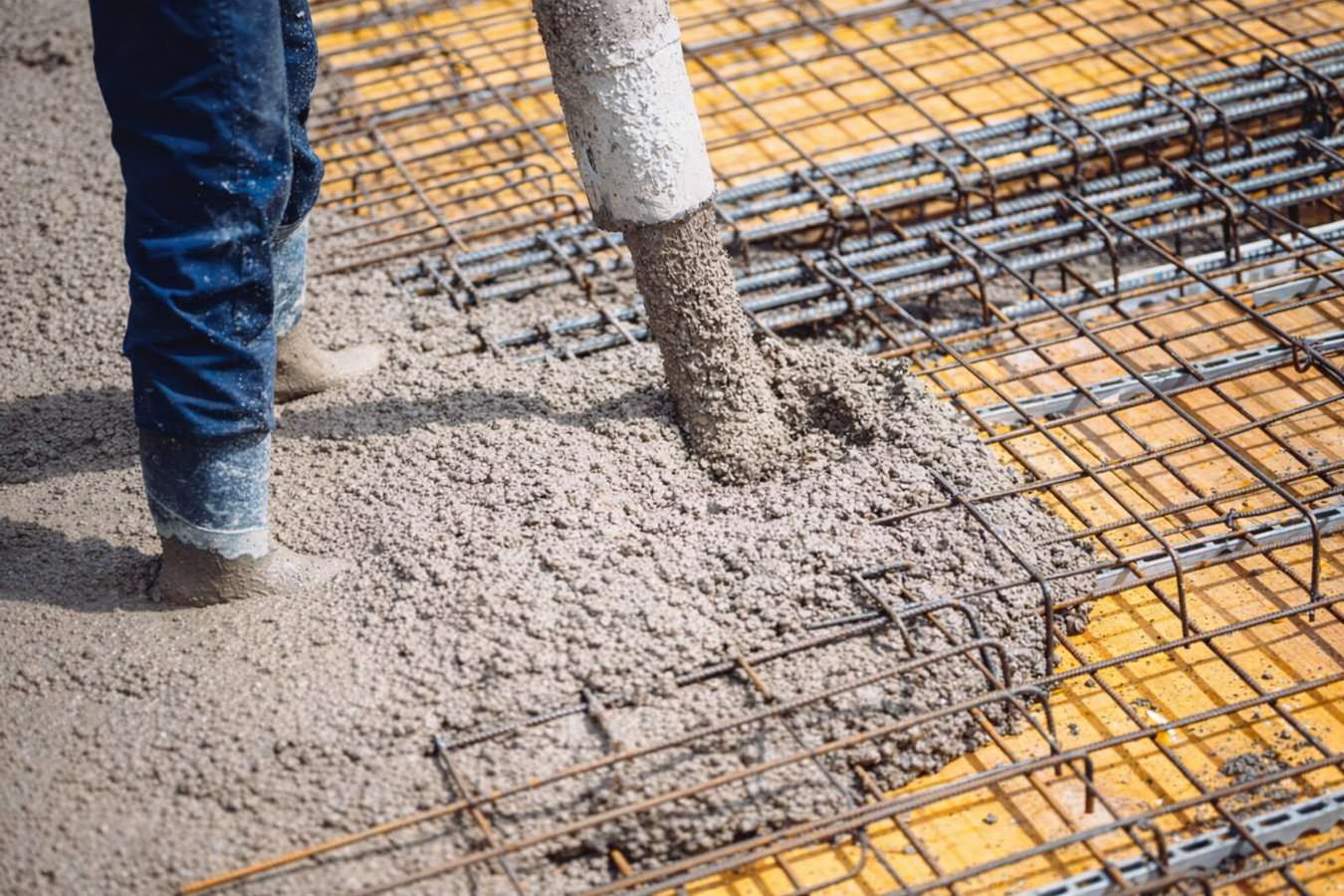
The pour happens in a single focused day. In Simi Valley's summer heat we schedule pours for early morning to protect quality. The concrete then cures for several weeks before being load-bearing. A final city inspection closes the permit, and you receive a full set of signed permit and inspection records to keep with your home's paperwork.
Permit season fills up fast in Simi Valley. Reach out now so we can assess your site and start the permit process before your project window closes. No obligation.
(805) 285-4986We apply for the permit, coordinate the pre-pour inspection with the City of Simi Valley's Building and Safety Division, and deliver a complete set of signed records when the job is done. Unpermitted foundation work creates real problems at resale - our documentation means your foundation is an asset, not a liability.
We visit every property before giving a price because soil conditions, slope, and site access vary across Simi Valley's neighborhoods and all three affect what the job costs. Our estimates are written and itemized so you know what you are paying for - no number adjusted upward after work begins.
Many homes in this city were built in the 1960s and 1970s to standards that predate current seismic and soil requirements. We have assessed and rebuilt foundations in these neighborhoods and know what to look for during excavation. When we find something unexpected, we tell you immediately and explain your options before we proceed.
Simi Valley sits near the Santa Susana fault system, and the expansive clay soils throughout much of the city add a second layer of demand on any foundation. We design steel reinforcement and drainage measures for these specific conditions on every job - verified by a city inspector who checks the work before the concrete goes in. The California Geological Survey publishes seismic hazard maps showing exactly why this matters in Simi Valley.
Every foundation we install in Simi Valley is permitted, inspected, and built with the soil and seismic conditions of this specific area in mind. That approach is why homeowners in this market keep calling us when the next project comes up.
Contractor licensing for California foundation work is verified through the California Contractors State License Board. Seismic hazard data for Simi Valley is published by the California Geological Survey. Foundation reinforcement standards are set by the American Concrete Institute.
Concrete parking lot construction for residential and commercial properties - often scoped alongside foundation work when driveways or access areas are part of the same project.
Learn morePoured concrete slab foundations for ADUs, garages, and new additions - the most common foundation type for new residential construction in Simi Valley.
Learn morePermit review adds weeks to every project timeline - reach out now so we can assess your site and get the process started before the season fills up.